5 to 7
Junior Thinker
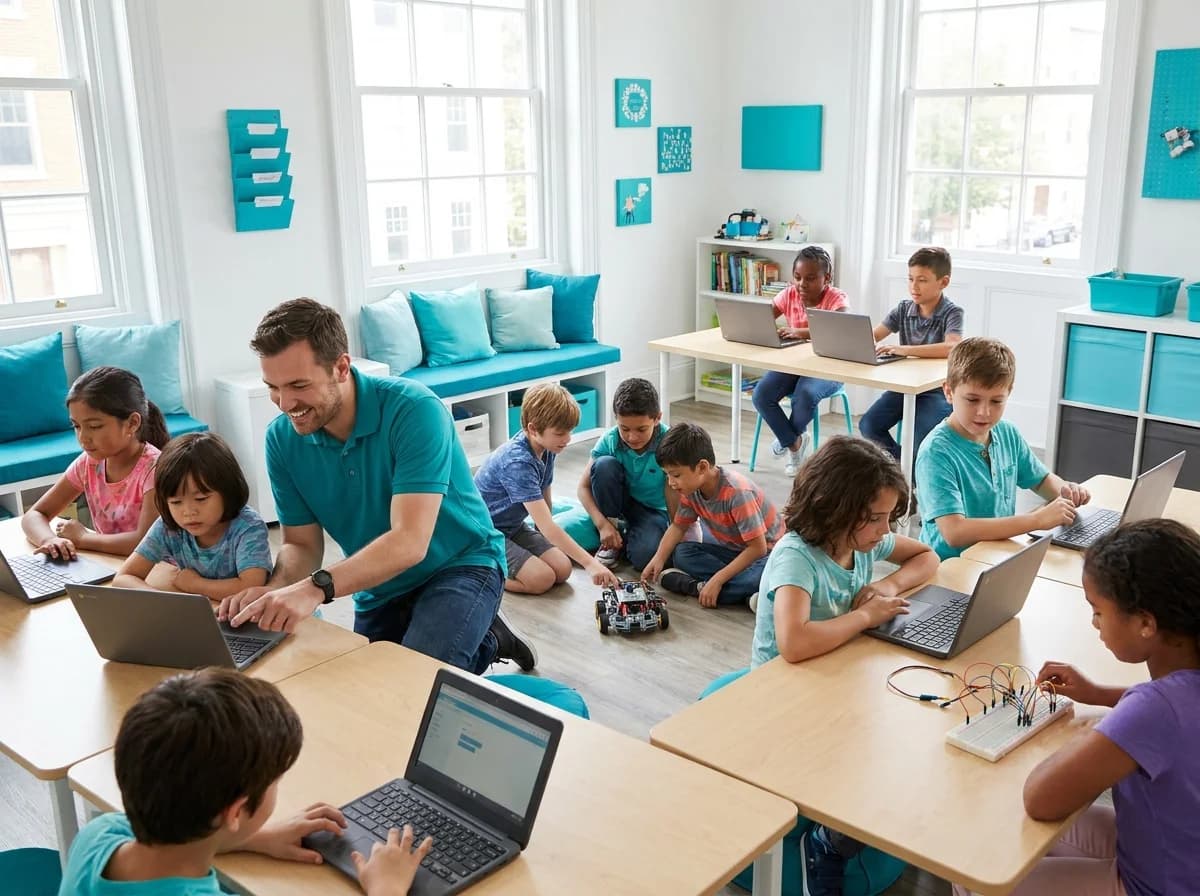
Your child drags picture blocks to make a character move, tells a story that plays back, and drives a floor robot around a mat, all before reading is fluent.
Junior Thinker, coding for ages 5 to 7 →We use cookies that are needed to run the site, and — only if you agree — cookies that measure how the site is used and how our ads perform. You can change or withdraw your choice at any time from “Cookie preferences” in the footer. Our Privacy Policy lists every tool we use and how long we keep the data.
Find the one that fits your child
Three programs covering ages 5 to 18, taught in person at our centres across Canada or online. Your child's first class is free and runs 60 minutes.
Age is the fastest way in, and for most families it settles the question. Where it does not, the guidance underneath will.
5 to 7
Your child drags picture blocks to make a character move, tells a story that plays back, and drives a floor robot around a mat, all before reading is fluent.
Junior Thinker, coding for ages 5 to 7 →7 to 14
Your child builds games in Scratch, moves on to Python, puts a website or app together, and trains an AI feature they can explain to you.
Junior Creator, coding and AI for ages 7 to 14 →14 to 18
Your teen writes production code in Java, C++, React and SQL, and leaves with projects and a portfolio that stand up to a university or an employer reading them.
Ultimate Innovator, engineering for ages 14 to 18 →At seven, reading is what decides it. A child who reads confidently and is keen to type is ready for Junior Creator. A child who is still finding reading hard is better off finishing Junior Thinker first: nothing is lost, and they arrive at Junior Creator able to move quickly.
At fourteen, experience decides it. A student who has coded before belongs in Ultimate Innovator. A student completely new to coding usually starts in Junior Creator, works through the fundamentals at their own pace, and moves up when they are ready.
You do not have to decide this on your own. The free trial class is the assessment: the instructor will tell you honestly which program they think fits, and it costs nothing to be wrong.
Everything that differs between the three, in one place.
Robotics and electronics are part of the program itself from twice a week upward, in all three. They are not an upgrade and there is nothing extra to buy.
Ultimate Math is a separate program for Grades 1 to 8, taught in the same rooms, in the same 60-minute sessions, with the same six students per instructor. It follows the curriculum your child is assessed on at school.
It is sold on its own or added to a coding enrolment, and the two run on separate days. The free assessment finds the specific idea your child is stuck on and sets their starting level out of twenty.
Ultimate Math, math for Grades 1 to 8 →However you answer the age question, the way classes run is the same.
You choose the frequency when you enrol, and you can change it later.
The same in all three programs, at every frequency.
Small enough that every child is worked with directly in each session.
A full 60-minute trial class, in a real group, at no cost.
Pass the check for a level and move up to the next one, at any of our centres.
For families outside the drive of a centre, or who would simply rather their child learned at their own desk. Junior Creator and Ultimate Innovator both run online. Junior Thinker is in person only: at five to seven, the floor robots and the hands-on work do not translate.
An online session runs the same 60 minutes with the same instructor-to-student ratio. Your child joins a live class, shares their screen when they need help, and works through the same levels as the students in the room.
It is not identical. Robotics and electronics kits are handled differently online, and a younger child in particular gets more out of being in the room. If you can get to a centre, we would tell you to.
How Learn from Home works →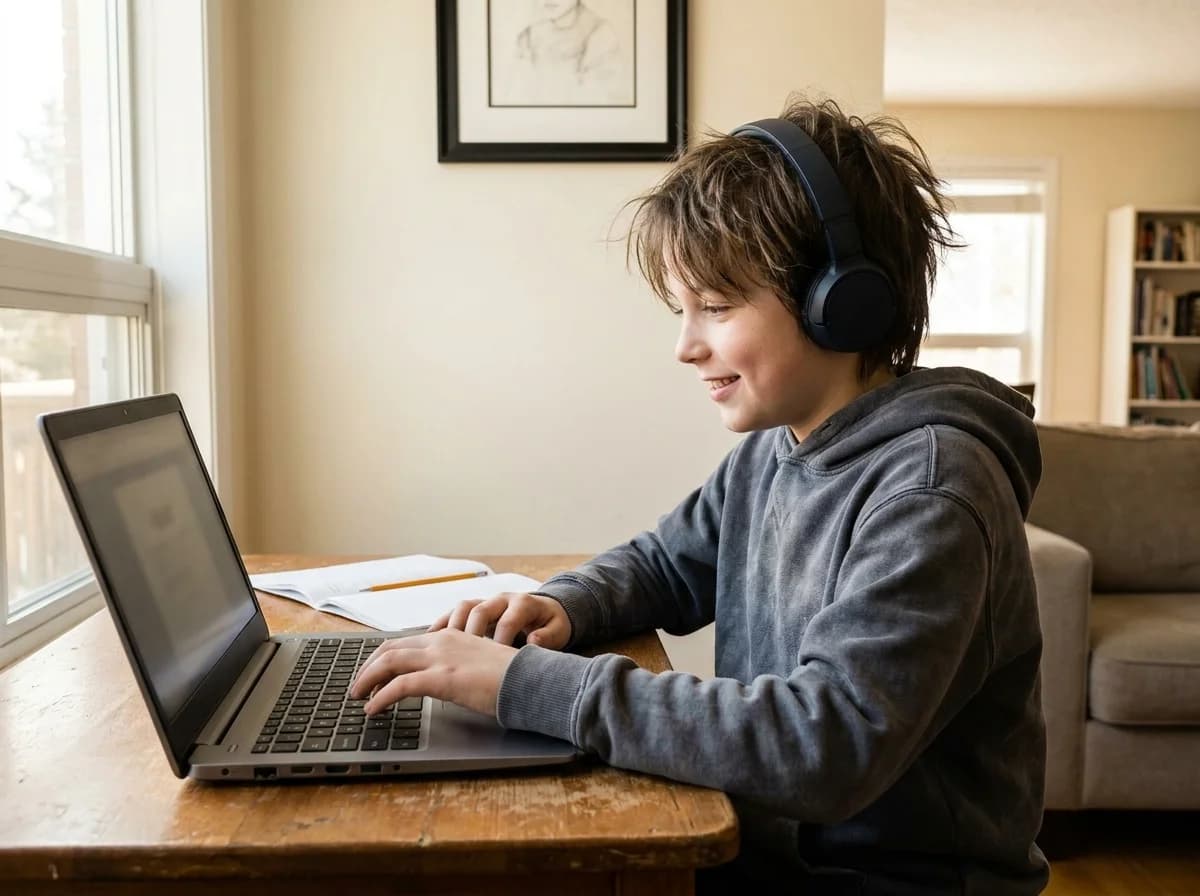
Other ways in, if a weekly program is not what you are looking for right now.
When your child outgrows a program, they carry on into the next one. Nothing restarts and nothing is repurchased: the same enrolment continues, the instructor tells you when the moment has come, and the levels pick up where the last program left off.
Junior Thinker
Ages 5 to 7
Junior Creator
Ages 7 to 14
Ultimate Innovator
Ages 14 to 18
Four things parents tell us, and where each one usually leads.
That is how most students arrive. Every program starts from nothing, so go by age rather than by experience.
Start with your child's age →School coding is usually Scratch. They can test out of the levels they have covered and start further along.
Junior Creator, coding and AI for ages 7 to 14 →Games are where most students start. Scratch first, then Python, then something they design themselves.
Junior Creator, coding and AI for ages 7 to 14 →Robotics and electronics are part of all three programs from twice a week upward, so pick by age and choose that frequency.
Start with your child's age →Hear From Parents
19 centres across Ontario, British Columbia and Alberta. Schedules and prices are set by each centre and shown on its own page.
Seven is the one age that sits in both. A child who reads confidently and wants to type is ready for Junior Creator; a child who is still finding reading hard will get more out of finishing Junior Thinker first. The free trial class is the quickest way to settle it, and the instructor will tell you what they saw.
Yes, in either direction and at any point. Speak to the instructor or the centre and the enrolment moves across. Nothing restarts and nothing is repurchased.
Yes. Every program has a starting point that assumes no experience, and most students arrive with none. The exception worth knowing: a teenager completely new to coding usually starts in Junior Creator rather than Ultimate Innovator, and moves up once the fundamentals are there.
Junior Creator and Ultimate Innovator both run online, as live classes with the same instructor-to-student ratio as a class in a centre. Junior Thinker is in person only.
Prices are set by each centre and depend on whether you choose once, twice or three times a week, so they are shown on the location pages rather than here. Pick your centre from the list above to see its prices.
Sixty minutes, which is a full session in a real class with other students rather than a shortened demonstration. There is no cost and no obligation to enrol afterwards.
Yes. Robotics and electronics are part of all three programs from twice a week upward: floor robots for the youngest students, Arduino in the middle program, and Raspberry Pi and hardware projects for teens. It is not an add-on and there is nothing extra to pay for it.
Yes, and in winter and over March break, plus single-day camps when school is closed. They run at the centres and can be booked without enrolling in a weekly program.

Sixty minutes, free, in a real class, and an honest answer from the instructor about which program fits.